
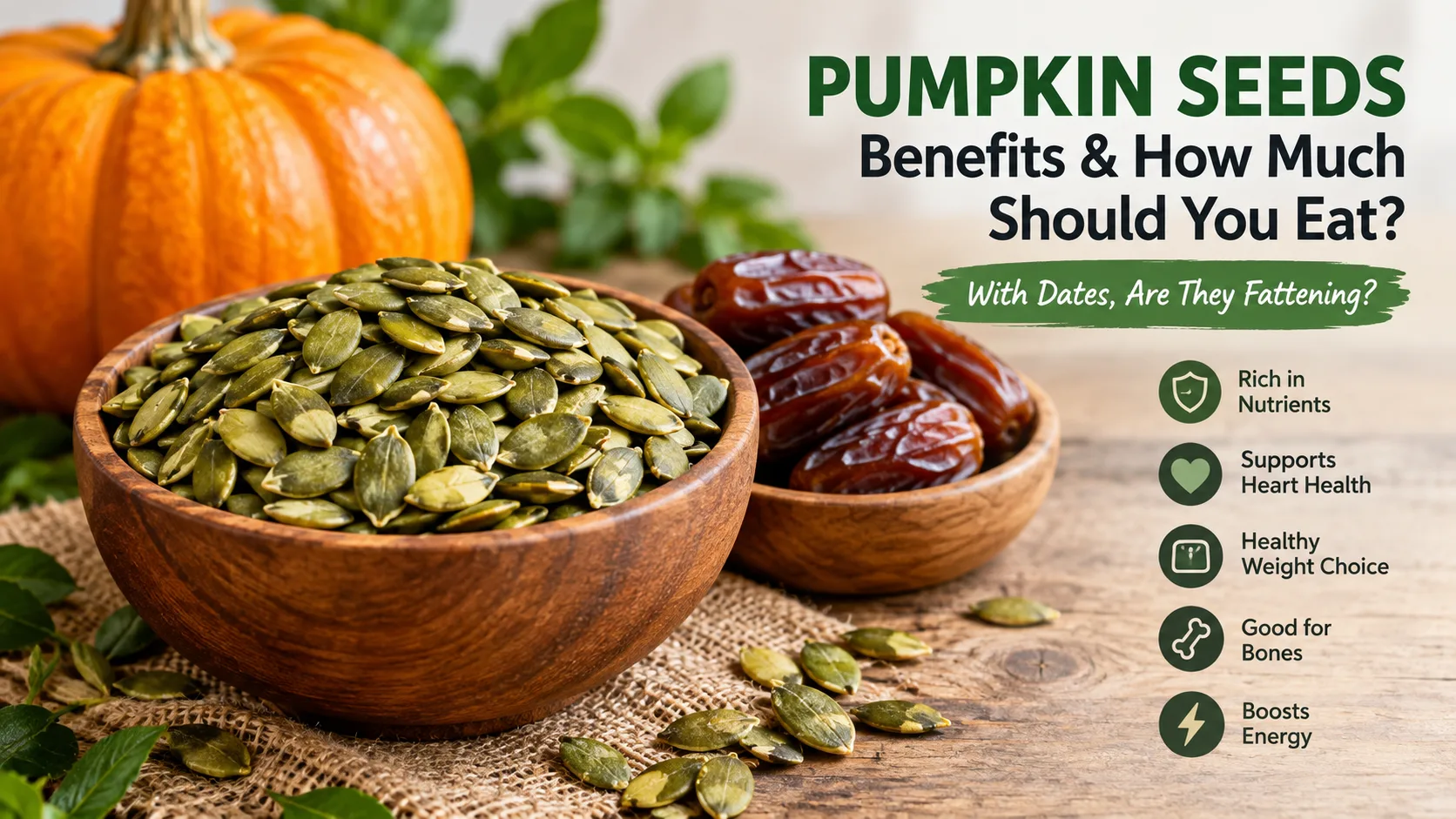
Pumpkin seeds are a nutritious food that can be added to a balanced diet in many simple ways. They contain protein, healthy fats, fiber and important minerals .
Pumpkin Seeds Benefits
Pumpkin seeds provide several nutrients, including magnesium, zinc, iron and protein. Their healthy fats and fiber can also make them a satisfying snack.
Dates With Pumpkin Seeds Benefits
Dates and pumpkin seeds are a popular combination because they provide different nutrients. Dates contain natural carbohydrates and fiber, while pumpkin seeds provide protein, healthy fats and minerals. Together, they can make a convenient energy-rich snack.
How Many Pumpkin Seeds Should I Eat a Day?
Around 26 grams, or one small handful, is a commonly used serving size for pumpkin seeds. The ideal amount can vary depending on your overall diet, calorie needs and health goals.
Are Pumpkin Seeds Fattening?
Pumpkin seeds are calorie-dense because they contain a significant amount of fat. Eating them in moderate portions does not automatically cause weight gain, but consuming large quantities can increase your daily calorie intake.
Austrian Pumpkin Seeds
Austrian pumpkin seeds are also very searched for because Austria is known for pumpkin varieties grown specifically for their seeds. Some varieties produce naturally hull-less seeds that can be eaten without removing a hard outer shell.
How to Eat Pumpkin Seeds
You can eat and enjoy pumpkin seeds as a snack or add them to yogurt, oatmeal, salads and smoothies. They can also be combined with dates for a simple and nutrient-rich snack.
Final Thoughts
Pumpkin seeds can be a useful addition to a balanced diet when consumed in reasonable portions. They provide protein, healthy fats, fiber and several minerals. If you are watching your calorie intake, paying attention to portion size is especially important.